

What Does Inflammation Mean?
Inflammation is part of the body’s immune response. Short-term inflammation helps the body respond to injury or infection. Persistent systemic inflammation is different and can be associated with many health conditions. It cannot be diagnosed from how sore, tired or “puffy” someone feels.
Researchers commonly measure CRP and immune signalling proteins called cytokines. These markers can change for many reasons, including infection, exercise, sleep, body weight, smoking, medication and chronic disease. A change in one marker is not the same as a confirmed health benefit.
Key Takeaways
- Frequent Finnish sauna use has been associated with lower C-reactive protein in large studies of middle-aged men.
- Those studies were observational, so they cannot prove that sauna caused the lower inflammation.
- A single sauna session can temporarily raise some signalling molecules while leaving C-reactive protein unchanged.
- Sauna should not replace diagnosis, medication or treatment for an inflammatory condition.
What the Long-Term Sauna Studies Found
One Finnish study included 2,084 men aged 42–60 who did not have acute or chronic inflammation at baseline. More frequent sauna bathing was associated with lower CRP after researchers adjusted for several health and lifestyle factors (Laukkanen & Laukkanen, 2018).
A related prospective cohort followed 2,269 men. More frequent sauna use was associated with lower CRP and white blood cell counts at baseline and at an 11-year measurement, while the oxidative-stress marker studied did not show the same pattern (Kunutsor et al., 2018).
These are valuable real-world data, but they share important limits. Sauna habits were self-reported, the participants were middle-aged Finnish men, and people who use sauna often may differ in exercise, income, social connection, diet or other ways that are hard to measure fully. The studies cannot prove that sauna was the cause.
What Happens After One Sauna Session?
The short-term response is more complicated than simply “inflammation goes down”. In a crossover study, 20 healthy adults with an average age of about 66 completed one or two ten-minute Finnish-sauna exposures at 80°C. Two sessions increased interleukin-6, while both protocols increased interleukin-1 receptor antagonist. CRP did not change (Behzadi et al., 2020).
Interleukin-6 can have different roles depending on context, and interleukin-1 receptor antagonist helps regulate inflammatory signalling. An acute rise after controlled heat may be part of a temporary stress response. It should not be described as evidence that the session inflamed or “detoxed” the body.
Does This Prove Sauna Treats Inflammatory Disease?
No. Lower population-level markers do not establish that sauna treats rheumatoid arthritis, inflammatory bowel disease, autoimmune disease or another diagnosed condition. Reviews of dry-sauna research find promising signals across several health areas, but many studies are small, use different protocols and have a risk of bias (Hussain & Cohen, 2018).
If you have an inflammatory condition, symptoms can also change independently of blood markers. Heat may feel soothing for stiffness in one person and worsen fatigue, dizziness or a flare in another. Your treating clinician should guide changes to medication or disease management.
Traditional and Infrared Evidence Are Not Interchangeable
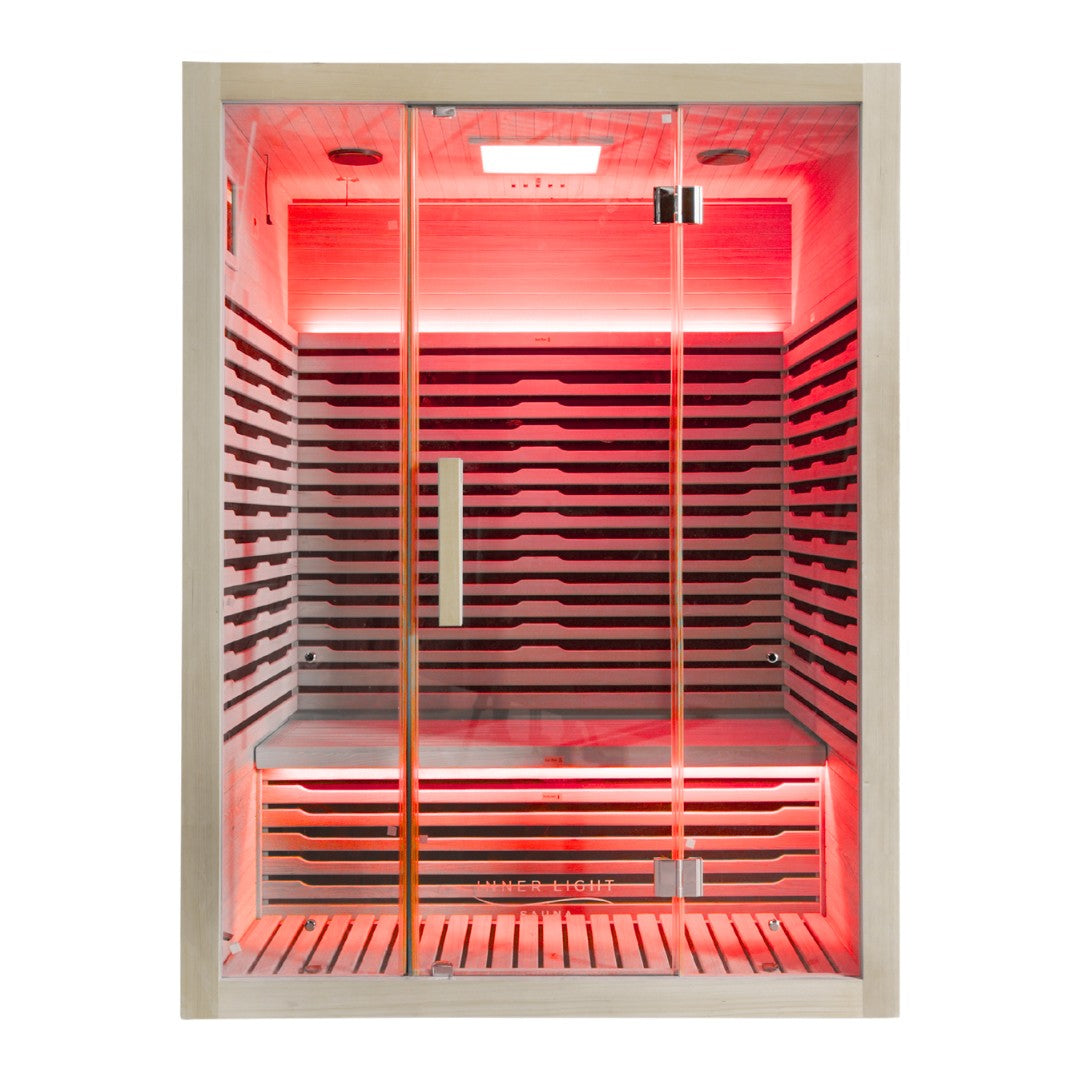
The large inflammation studies used Finnish-style sauna. Infrared saunas generally operate at a lower air temperature and warm the body differently. Both are forms of passive heat exposure, but a result from one format should not be presented as proof for the other. Direct trials comparing inflammation outcomes between sauna types are still lacking.
How to Use Sauna as a General Wellness Practice
Treat sauna as an optional wellness practice, not a laboratory test or anti-inflammatory prescription. If you are medically cleared, start conservatively, use a temperature and duration you tolerate, cool down normally and replace fluids in a way that suits your health needs.
Stop if you feel faint, confused, nauseated, unusually weak, short of breath or develop chest pain or palpitations. Seek medical advice before use if you have unstable cardiovascular symptoms, impaired sweating, significant kidney disease, uncontrolled blood pressure, fever or an active illness.
Choosing a Home Sauna
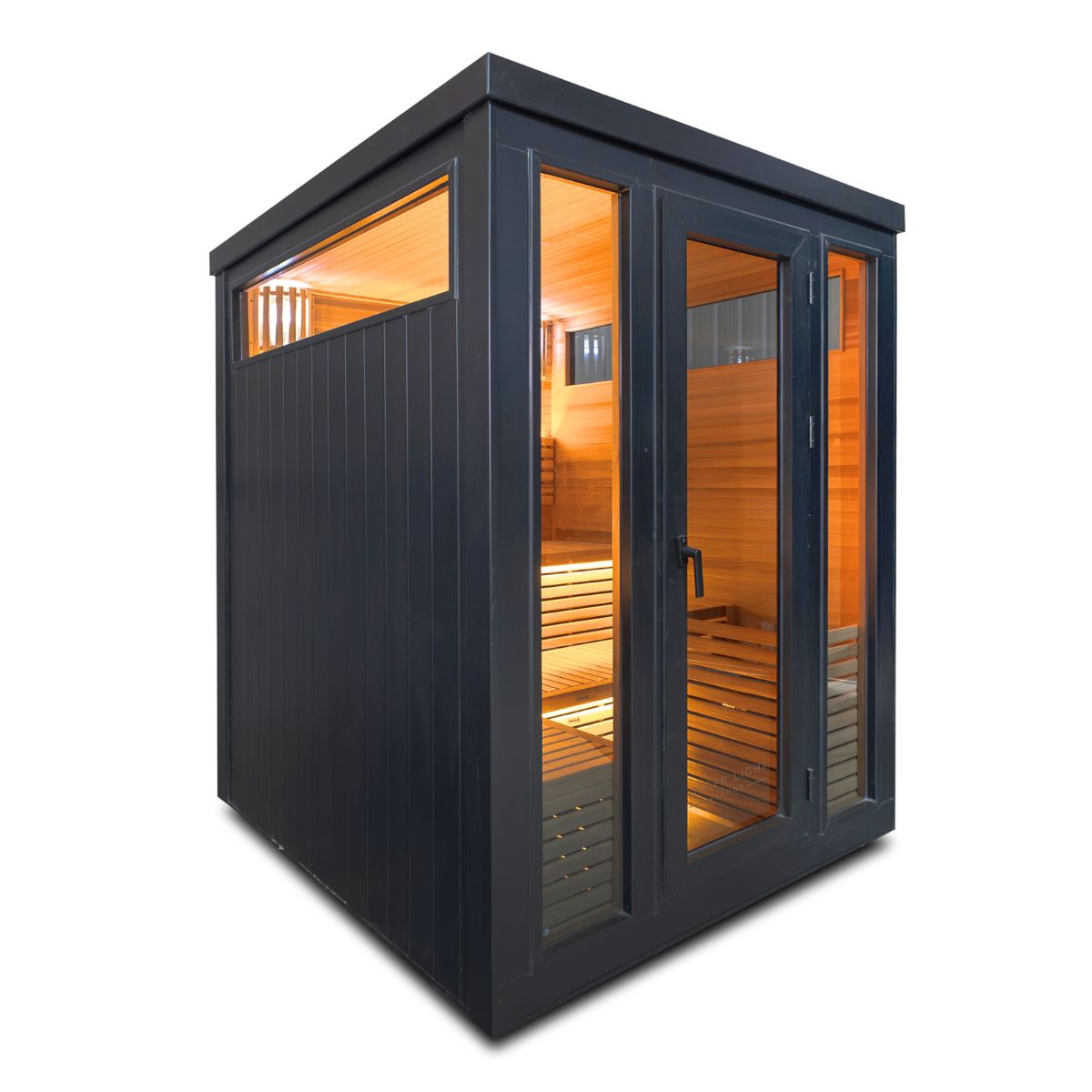
Choose according to the experience, location and capacity you will use consistently, not a promise to cure inflammation. The Sauna Finder can help compare needs. Browse indoor infrared saunas and traditional saunas, or review models such as the Mali 3 Person Indoor Infrared Sauna and the Demfin 5 Person Traditional Outdoor Sauna.
Final Answer
Human studies suggest an association between frequent Finnish sauna bathing and lower levels of some inflammatory markers. They do not prove that sauna reduces chronic inflammation or treats disease. A single session can temporarily increase some immune signals, so the response is more nuanced than “lower is always better”. Use sauna as a complementary wellness habit only when it is appropriate for your health.
Sauna and Inflammation
Frequently Asked Questions
These answers explain sweating, sauna frequency, infrared heat and prescribed anti-inflammatory treatment.
Does Sweating Remove Inflammation From the Body?
No. Sweat mainly helps regulate temperature. It is not a method for extracting inflammation, and the body does not remove inflammatory disease through the skin.
How Many Sauna Sessions Reduce Inflammation?
Research has not established a therapeutic dose for inflammation. Observational frequency patterns are not a prescription for an individual.
Is Infrared Sauna Better for Inflammation?
There is not enough comparative human evidence to say it is better. Most large studies used traditional Finnish sauna.
Can I Stop Anti-Inflammatory Medication if I Use a Sauna?
No. Do not stop, reduce or replace prescribed treatment because of sauna research. Discuss any medication change with the clinician who manages your condition.
References
Behzadi, P., Gravel, H., Neagoe, P.-E., Barry, H., Sirois, M. G., & Gagnon, D. (2020). Impact of Finnish sauna bathing on circulating markers of inflammation in healthy middle-aged and older adults: A crossover study. Complementary Therapies in Medicine, 52, Article 102486. https://doi.org/10.1016/j.ctim.2020.102486
Hussain, J., & Cohen, M. (2018). Clinical effects of regular dry sauna bathing: A systematic review. Evidence-Based Complementary and Alternative Medicine, 2018, Article 1857413. https://doi.org/10.1155/2018/1857413
Kunutsor, S. K., Laukkanen, T., & Laukkanen, J. A. (2018). Longitudinal associations of sauna bathing with inflammation and oxidative stress: The KIHD prospective cohort study. Annals of Medicine, 50(5), 437–442. https://doi.org/10.1080/07853890.2018.1489143
Laukkanen, J. A., & Laukkanen, T. (2018). Sauna bathing and systemic inflammation. European Journal of Epidemiology, 33(3), 351–353. https://doi.org/10.1007/s10654-017-0335-y



Share: