
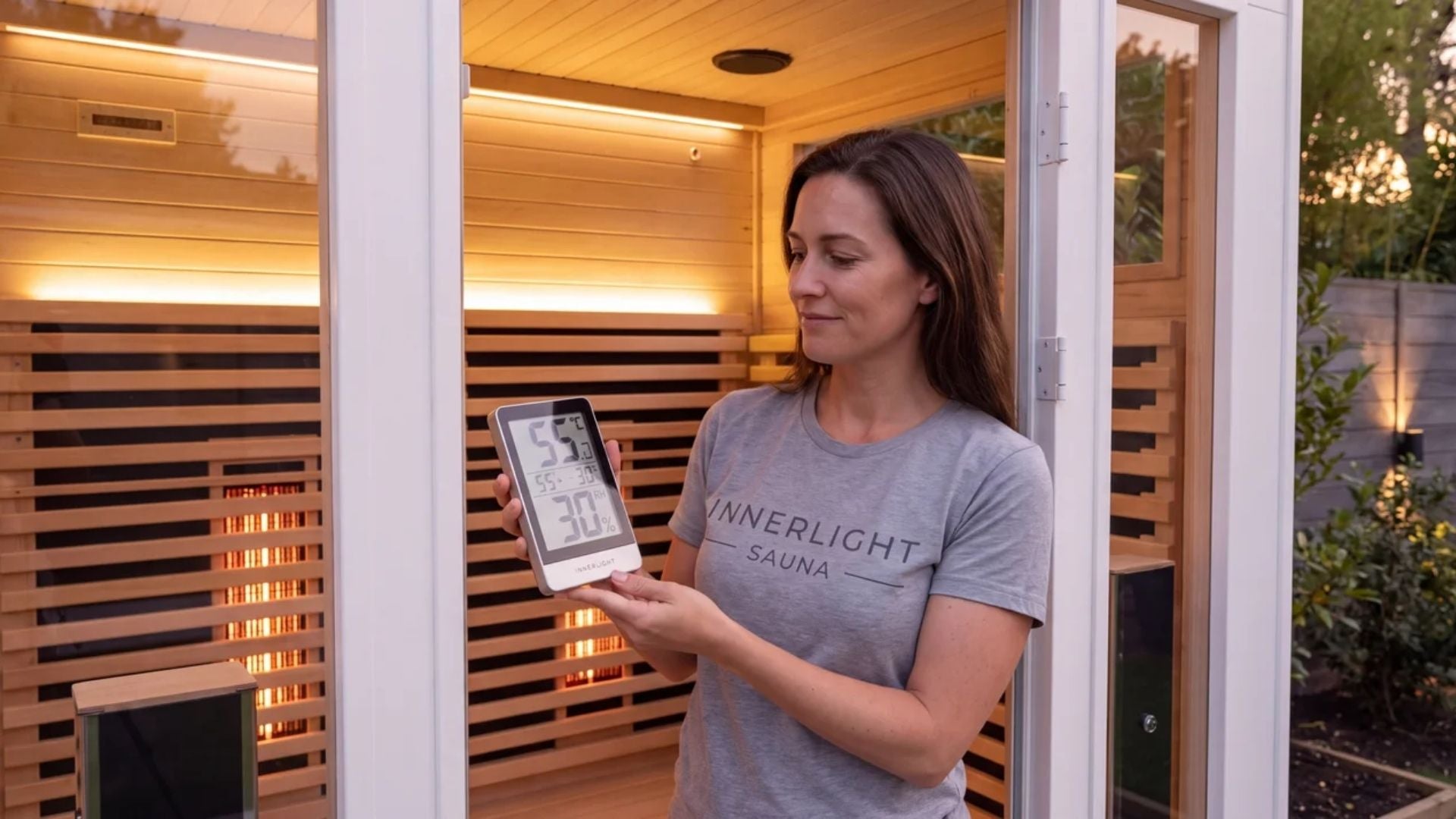
A separate sauna thermometer is useful for checking the approximate temperature where you sit, while a hygrometer helps show relative humidity, especially in a traditional sauna where water is thrown on stones.
Neither device is essential for controlling a modern sauna with built-in sensors, and neither should be used to bypass or relocate the manufacturer's safety controls.
Key Takeaways
Separate instruments can help you understand cabin conditions, but they do not replace the sauna’s built-in controls.
- A built-in control sensor manages the heater; a separate dial or digital meter is a reference instrument.
- Temperature varies according to instrument placement, including its height, wall position and distance from the heater.
- A hygrometer is most informative in a traditional sauna because steam can cause humidity to change quickly.
- Use heat-rated sauna instruments and follow the heater manufacturer’s placement and calibration guidance.
Thermometer, Hygrometer and Control Sensor: The Difference
A thermometer measures temperature, a hygrometer estimates relative humidity and a thermo-hygrometer combines both. These are reference instruments mounted inside the cabin.
The control sensor is part of the heater and safety system. It tells the controller when to supply or reduce heat and may include an over-temperature cut-out. Its location follows the heater design.
Harvia's temperature-sensor installation guidance shows how model, heater position, vents and ceiling location affect sensor placement. Never move a control sensor to make the heater run hotter.
Do You Need a Separate Thermometer?
Not necessarily. If the built-in display is clear, an extra thermometer is optional. It can still cross-check conditions or show differences between seat heights.
Expect displays to differ. Sensors may sit at different heights, hot air rises, radiant heaters warm nearby surfaces and the cabin cycles rather than holding one temperature everywhere.
A difference does not automatically mean one instrument is faulty. Compare readings only after a consistent warm-up, with the door closed and the reference thermometer in its recommended position.
When Is a Hygrometer Useful?
A hygrometer is most useful in a traditional sauna. Humidity rises briefly when water meets hot stones, changing the perceived heat even if temperature barely moves.
Harvia offers a purpose-made sauna thermo-hygrometer, illustrating that both readings can be useful references rather than precise laboratory control values. In an infrared sauna, where users generally do not throw water on heaters, humidity is often less central to session control. The reading may mainly reflect the room, the user's perspiration and ventilation.
If you are deciding between sauna types, the infrared versus traditional sauna guide explains how heat and humidity experiences differ.
Where Should You Place the Instrument?
Follow the instrument and sauna manual. A typical reference position is near seated upper-body height, away from the heater, door, vent and splash. A meter above a hot-stone heater will not represent the bench.
Keep it clear of infrared heater panels unless the product is designed for that location. In a traditional sauna, do not mount it where ladled water or steam will directly strike it. Make sure fixings do not puncture hidden wiring, vapour layers or glass.
For a meaningful comparison, leave the instrument in one place. Moving it around while trying to match the controller can create more confusion than useful information.
How Accurate Are Sauna Dials?
Many analogue sauna instruments show a practical range, not laboratory precision. Tolerance, transport, position and response time can affect the display, and a hygrometer may take time to stabilise.
If the manufacturer provides a calibration procedure, follow it exactly. Do not put an instrument in an oven or expose a battery device to temperatures beyond its rating. Replace a cracked, fogged, corroded or erratic meter.
When readings seem implausible, compare them under stable conditions with another heat-rated instrument before assuming the heater control is wrong. If the built-in system overheats, shows an error or behaves abnormally, stop using the sauna and contact support rather than relying on the wall dial.
Use Readings to Guide Comfort, Not Chase a Number
The preferred setting depends on sauna type, experience and individual comfort. The guide to sauna temperatures gives a useful comparison, while the dedicated page on infrared sauna temperature settings offers a practical starting point.
Increase exposure gradually and leave if you feel dizzy, unwell or excessively uncomfortable. A thermometer cannot determine medical suitability, so seek individual advice when needed.
If you are still choosing equipment, the Inner Light Sauna Finder can help match infrared, traditional or hybrid models to your space and preferred experience.
Final Answer
You do not need a separate thermometer or hygrometer for every sauna, but they can make conditions easier to understand. Treat them as reference instruments, place them consistently and expect readings to vary from the built-in control sensor. A hygrometer adds the most insight in a traditional sauna, where steam changes humidity during the session.
Sauna Instruments FAQ
Frequently Asked Questions
These answers explain thermometer placement, control-panel differences and when a hygrometer is useful.
Why Does My Sauna Thermometer Differ From the Control Panel?
They may be at different heights and distances from the heater, and they may respond at different speeds. Temperature is not uniform throughout a sauna, so some difference is normal.
Where Should a Sauna Thermometer Be Mounted?
Use the manufacturer’s recommended position, generally near the occupied zone and away from direct heater heat, doors, vents and water splash. Do not drill until hidden services and mounting instructions are clear.
Do Infrared Saunas Need a Hygrometer?
Usually not for normal operation. Infrared cabins do not generally use water on stones, so humidity changes are less central. A hygrometer can still be an optional environmental reference.
Can I Move the Sauna’s Built-In Sensor if the Reading Seems Wrong?
No. Its location is part of the heater’s control and safety design. Contact the supplier or an authorised installer if you suspect a sensor problem.



Share: