
A “non-toxic sauna” should be supported by specific information about timber, engineered boards, adhesives, coatings, sealants and heated components. The phrase is not a complete test standard.
Ask what is present, where it is used and whether relevant emissions or material documentation exists.
Key Takeaways
A credible non-toxic sauna claim depends on the materials, supporting evidence and preparation instructions—not the label alone.
- “Non-toxic” is a broad marketing phrase, so look for named materials and supporting evidence.
- Solid timber can reduce reliance on some engineered panels, but it does not automatically mean zero emissions.
- Adhesives, finishes and sealants also matter because cabin materials are repeatedly warmed during use.
- Low-odour construction, ventilation and correct first-use preparation all support a more comfortable cabin.
What Do Buyers Usually Mean by “Non-Toxic”?
Most buyers want to avoid strong chemical odours, unnecessary coatings and high-emitting composite materials in a small heated space. They also want clarity about formaldehyde, volatile organic compounds, or VOCs.
VOCs are carbon-based chemicals that can enter indoor air from many sources, including building materials, furnishings and cleaning products. The Australian Centre for Disease Control includes VOCs among the factors that can affect indoor air quality. That does not mean every detectable compound creates the same risk. Substance, concentration, exposure time and ventilation all matter.
The most useful buying question is therefore not “Is this sauna chemical-free?” It is “What is in this exact model, and what evidence supports the material claims?”
Timber: Solid Wood, Veneer and Engineered Panels
Sauna cabins commonly use timbers such as Canadian Hemlock, cedar or other suitable species. Solid timber is often preferred inside the hot cabin because it avoids some binders used in particleboard or medium-density fibreboard. However, “solid timber” should describe the actual panels and structural parts, not simply the visible surface.
Ask whether any plywood, MDF, particleboard, laminate or veneer is used in the walls, roof, floor, bench or external trim. Engineered wood is not automatically unsuitable, but its resin system, location and emissions classification should be disclosed so you can make an informed comparison.
Wood itself can also release naturally occurring compounds and has its own scent. That is why “solid wood” and “zero VOC” are not interchangeable claims. The guide to infrared sauna wood types explains other practical factors, including stability, heat behaviour and maintenance.
Why Glues, Sealants and Finishes Matter
Even a mainly solid-timber cabin may use adhesive in joints, around glass or in laminated components. Outdoor models may also need weather-resistant sealants. Ask what is used and whether it is inside the heated air space.
Finishes need the same scrutiny. An unfinished interior differs from an exterior coating, bench oil or lacquer. Ask which surfaces are coated and what product was used.
Do not apply household varnish, paint, fragrance oil or an unapproved timber treatment inside a sauna. Heated surfaces create different conditions from ordinary furniture. Follow the manufacturer's care instructions and keep products off heaters, sensors and electrical components.
What Evidence Can You Request?
Start with a material declaration for the exact model. Useful evidence can include an emissions test, engineered-panel formaldehyde classification, adhesive or coating safety data, and the test standard used.
Check whether a report covers a raw material, one component or the complete cabin. A timber certificate does not automatically cover glue or finish, and a result from another model may not apply. Evidence should identify what was tested and how.
What About a New-Sauna Smell?
A mild timber or packaging smell during initial warm-up is not proof of a hazardous emission, but a sharp or persistent odour should not be ignored.
Follow the supplied first-use or burn-in instructions, keep the room ventilated and remove all protective film and packing material. Stop using the sauna and contact the supplier if there is a burning-plastic smell, smoke, visible melting, eye or throat irritation, or an odour that does not settle as the manual indicates.
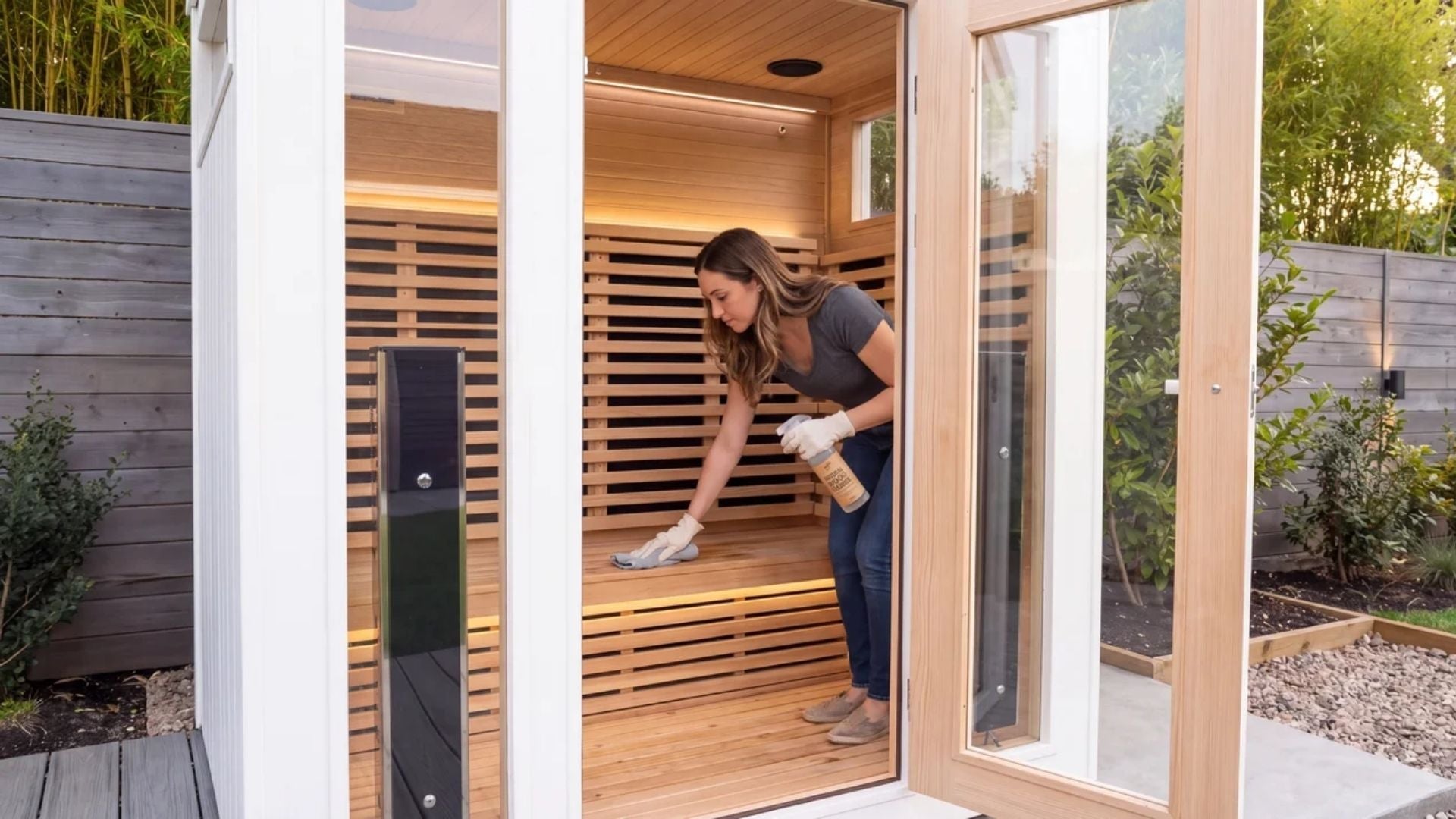
Routine care matters after installation. Use the mild methods in the infrared sauna cleaning guide rather than strong household chemicals. Good drying and ventilation also help prevent mould in a sauna.
How to Choose With Confidence
Compare named timber and panel materials, internal finishes, adhesives, heater construction, ventilation, electrical documentation and warranty support. Product transparency is more valuable than a broad “eco” or “non-toxic” badge.
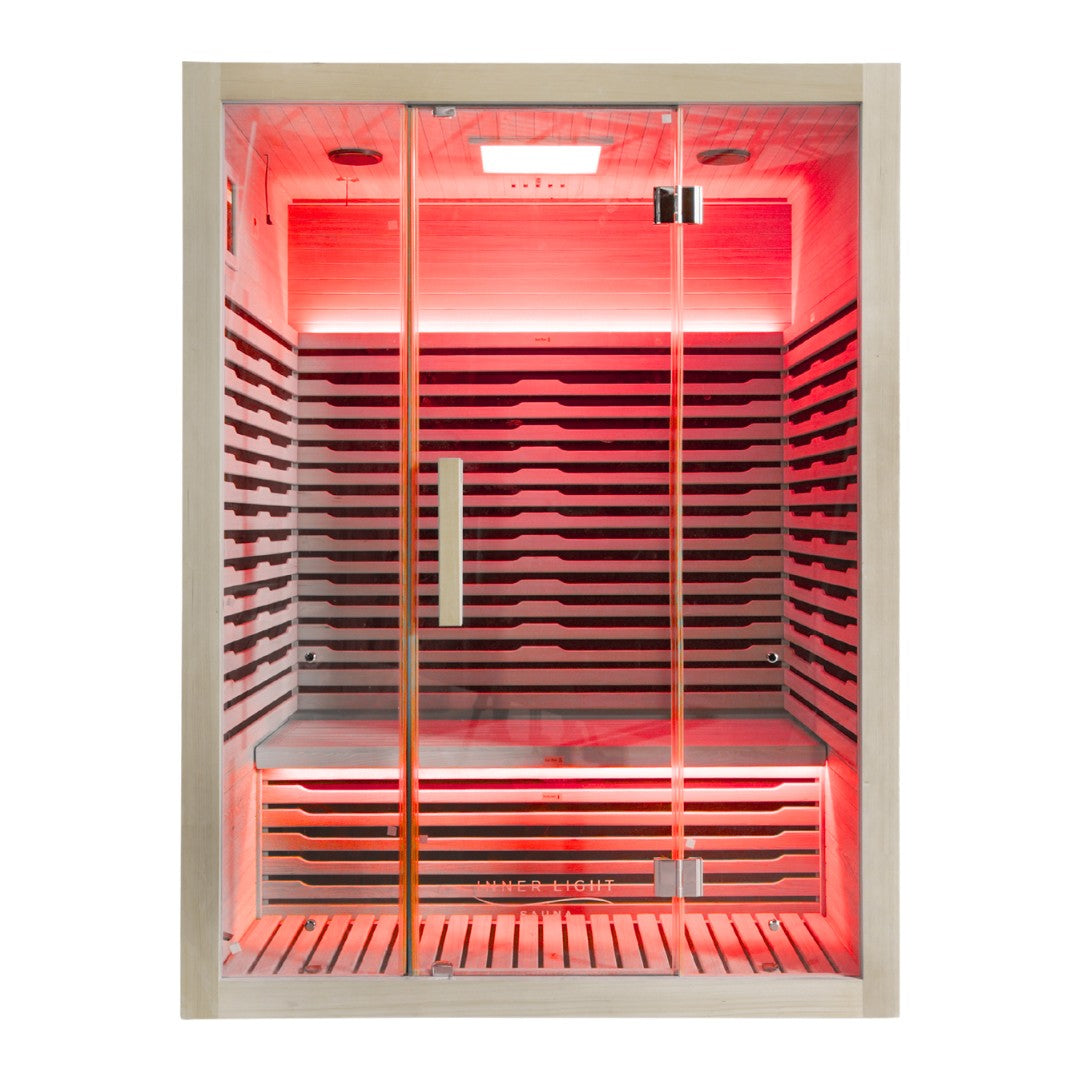
You can use the Inner Light Sauna Finder to identify models that suit your capacity and location, then ask material questions about the exact shortlist. For example, the Mali 2 Person Infrared Sauna lists Canadian Hemlock construction, but buyers should still confirm any material detail that is important to them directly against the current model documentation.
Final Answer
A credible non-toxic sauna claim is specific and verifiable. Look beyond the label to the timber, engineered panels, glues, coatings and sealants used in the exact model. Request relevant documents, prepare and ventilate the cabin as directed, and avoid adding unapproved chemicals to the heated interior.
Non-Toxic Sauna FAQ
Frequently Asked Questions
These answers explain common questions about sauna timber, formaldehyde, interior finishes and new-sauna odours.
Are Solid-Timber Saunas VOC-Free?
Not necessarily. Solid timber avoids some composite-board binders, but wood releases natural compounds and a cabin may still contain adhesives, sealants or coatings. Ask about the whole construction.
Is Formaldehyde Only Found in MDF?
No. Formaldehyde can come from multiple indoor sources, and some wood products use formaldehyde-based resins. The relevant questions are which material and resin system are used, what the emissions results show, and where the material appears in the sauna.
Should the Inside of a Sauna Be Varnished?
Only use a finish that the sauna manufacturer specifically approves for that surface and operating temperature. Ordinary household paint or varnish may be unsuitable for benches or heated interior timber.
Is a New Sauna Smell Normal?
A mild timber or packaging smell can occur initially. A strong chemical or burning smell, smoke, melting or irritation is a reason to stop using the sauna, ventilate the area and contact the supplier before using it again.


Share: