
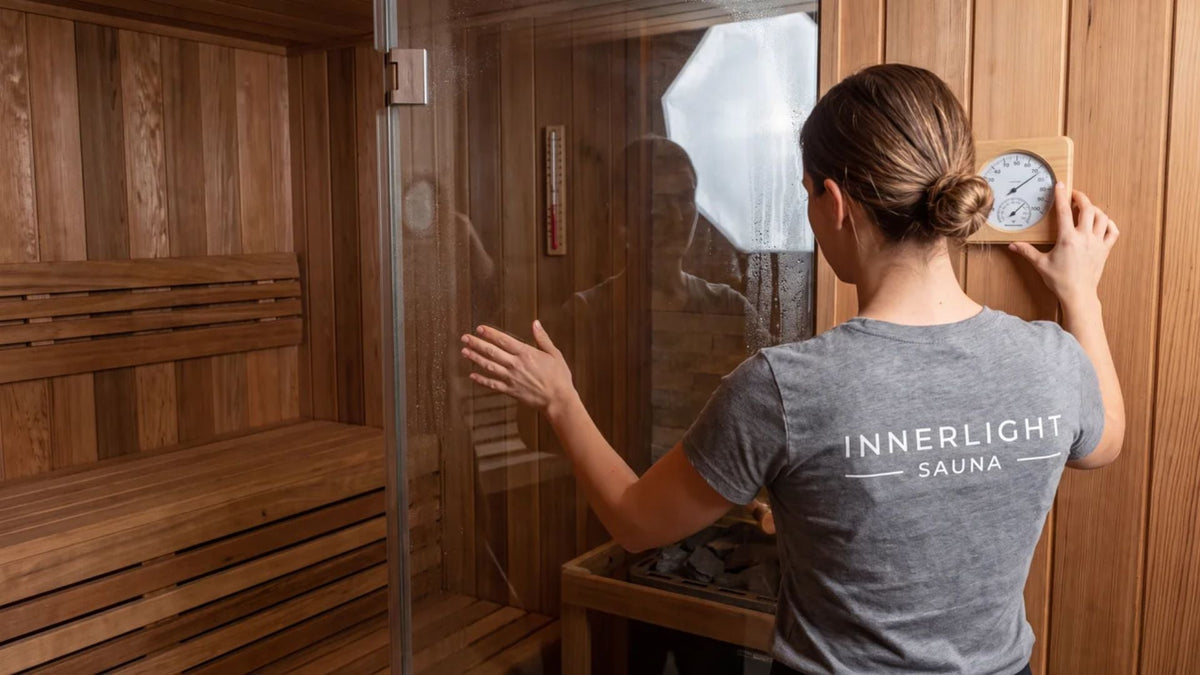
Saunas commonly use tempered, also called toughened, safety glass because it is stronger against impact and temperature stress than ordinary annealed glass and is designed to break into smaller fragments if it fails.
Thickness matters, but so do panel size, support, edge condition, hardware, seals and the complete tested design.
Key Takeaways
Sauna glass should be judged as part of the complete door and cabin system, including its frame, hinges, seals and heater capacity.
- Tempered safety glass is heat-treated for greater strength and a safer breakage pattern than ordinary glass.
- A thicker panel is not automatically better unless it suits the door, hinges, frame and overall cabin design.
- Glass area and seals can influence heat loss, but heater capacity and the cabin’s overall insulation also matter.
- Chips, edge damage, loose hardware or new cracks require prompt assessment, not a DIY repair.
Tempered, Toughened and Ordinary Glass
“Tempered” and “toughened” generally refer to the same heat-treatment process. The glass is heated and rapidly cooled to create surface compression. This makes it stronger than ordinary annealed glass of the same thickness and changes how it breaks.
When toughened safety glass fails, it is intended to fragment into relatively small pieces rather than long shards. That reduces certain injury risks but does not make it unbreakable.
The Australian Glass and Window Association provides public glass and glazing technical resources. For a sauna buyer, the important point is that the panel, holes, hinges and frame should be designed together. A material name alone does not verify the complete installation.
Why Sauna Glass Faces Demanding Conditions
A sauna door moves through repeated heating and cooling while carrying its weight through hinges or a frame. It can also face impact during delivery, assembly and use.
Toughened glass suits these conditions better than ordinary glass, but its edges remain vulnerable. Hard floor contact or overtightened hardware can concentrate stress, so follow the installation manual.
Do not stand a frameless panel directly on tile or concrete. Keep protective blocks in place until the installation step requires their removal, and use the specified gaskets and washers around hardware.
Does Glass Thickness Matter?
Yes, but it is only one design variable. Door height, frame, panel width, hole position, hinge capacity and glass quality all affect the choice.
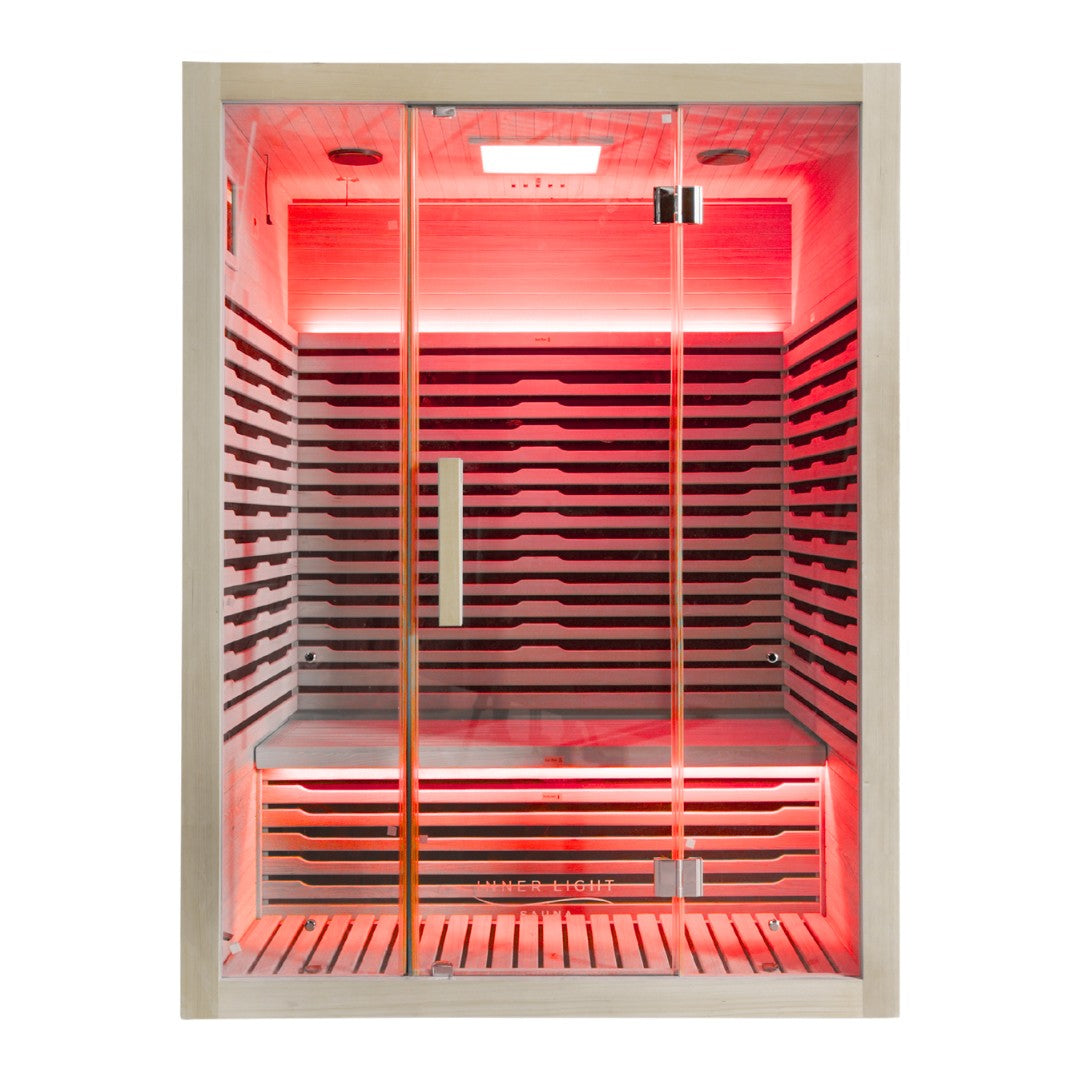
For example, the current Mali 2 Person Infrared Sauna specifies 8 mm tempered safety glass for its door and side panels. That describes this model. It does not establish 8 mm as the universal minimum or optimum for every sauna.
When comparing models, ask for the glass type and thickness, then look at the complete door system. Does it close cleanly? Are the hinges suitable for the panel? Are the gaps and seals even? Is replacement glass available for that exact model?
Does More Glass Make a Sauna Less Efficient?
Glass usually transfers heat more readily than an insulated wall, so a larger glazed area can increase heat loss. The effect also depends on gaps, seals, wall construction, heater output, cabin volume and surrounding temperature.
A well-designed glass-fronted sauna can still heat as intended because the heater system is sized for that cabin. Do not compare efficiency from glass thickness alone. Compare rated power, warm-up guidance and the intended indoor or outdoor location.
The article on how hot a sauna should be explains why traditional and infrared cabins use different temperature ranges. If an infrared cabin warms unusually slowly, check its electrical requirements and contact support rather than adding an unofficial glass seal.
Care and Cleaning Without Damaging the Glass
Let the panel cool, use a soft cloth and follow the manufacturer's cleaning method. Avoid abrasive pads, metal scrapers and harsh products.
The door should open freely without dragging or striking the frame. For loose hardware, stop and ask the supplier for the correct procedure because overtightening can also cause damage.
Tempered glass cannot be safely cut or drilled after manufacture. A misaligned hole, damaged edge or unsuitable replacement panel requires a correctly made replacement, not a workshop modification.
When Should You Stop Using the Sauna?
Stop if you see a new crack, deep scratch, edge chip, damaged hinge, displaced gasket or panel that moves unexpectedly. Keep people away from the door and contact the supplier with clear photos. Do not tape over a crack and continue heating the cabin.
Accidental glass damage may have different warranty treatment from a manufacturing defect, so read the current Inner Light Sauna warranty and document the condition before moving anything. When choosing a model, the Inner Light Sauna Finder can help balance cabin size, location and design preferences, including the amount of glazing.



Share: