
Key Takeaways
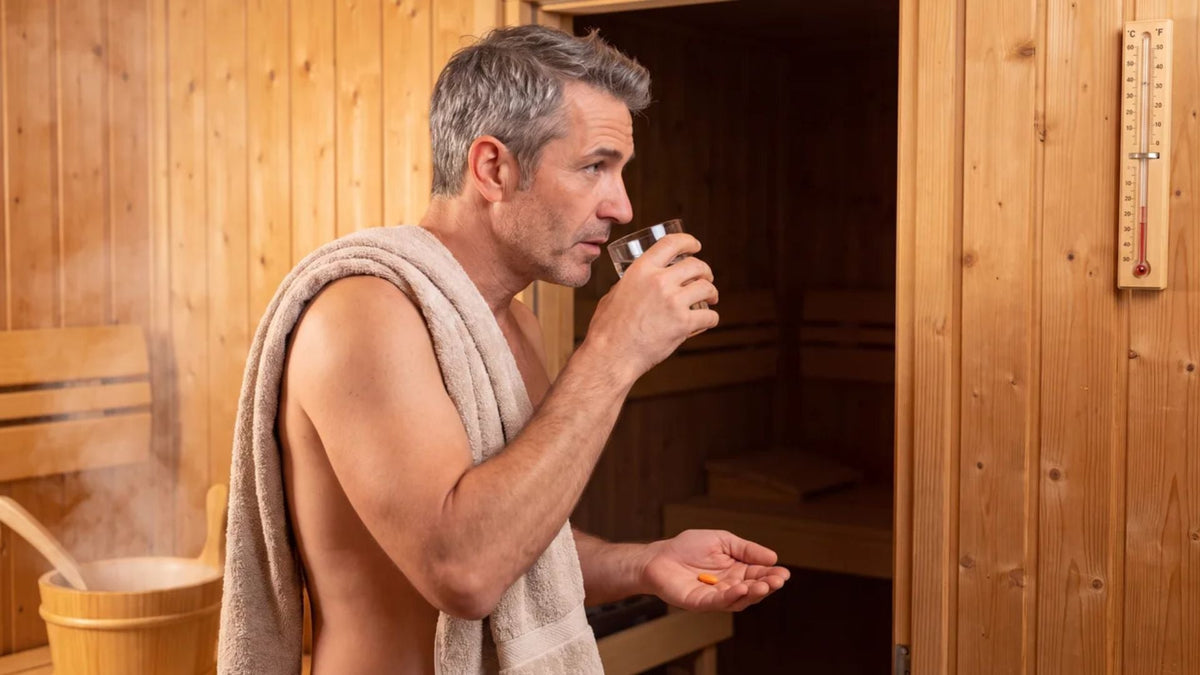
- Many people who take medication can use a sauna, but safety depends on the drug, dose, condition and heat exposure.
- Some medicines may affect sweating, fluid balance, blood pressure, alertness or temperature control.
- Do not stop, delay or change a medicine to make a sauna session possible.
- Ask about your exact medication list rather than relying on a broad online safe-or-unsafe list.
Why Medication Can Change the Heat Response
The body manages heat by sending more blood to the skin and producing sweat. A sauna adds a controlled heat load, while sweating removes water and electrolytes. Several medication effects can overlap with that process.
A diuretic may increase fluid loss. A medicine that lowers blood pressure or heart rate may change the cardiovascular response. Anticholinergic effects can reduce sweating. Sedating medicines may make it harder to notice symptoms or leave promptly. Other medicines can affect thirst, kidney function or central temperature control (Westaway et al., 2015; Wee et al., 2023).
These are possible mechanisms, not a declaration that every medicine in a broad class is incompatible with sauna. Dose, formulation, other medicines, age, illness and acclimatisation all matter.
What Does the Research Show?
Much of the medication evidence comes from controlled heat-stress experiments or heatwave research, not home sauna trials. A 2024 systematic review combined 35 randomised studies involving 353 people. Most participants were healthy young men, only one study involved a clinical population, and 27 medicines were tested (Hospers et al., 2024).
The review found evidence that strong anticholinergic exposure, represented mainly by atropine, and some other studied medicines increased core temperature during heat stress. Several medicine groups often flagged in public advice did not increase core temperature in the included experiments. That does not prove they are risk-free in a sauna. The studies were short, usually involved young participants and did not capture every relevant outcome, such as dehydration, falls or interactions between multiple medicines.
Sauna-specific drug research is sparse. One older study compared blood-pressure responses to sauna in young people with hypertension treated with atenolol or diltiazem (Luurila et al., 1989). A result from two particular drugs in a small group cannot be used to clear another medicine or an older person with several conditions.
Which Medicines Deserve a Conversation?
Ask before sauna use if you take a diuretic; blood-pressure, heart-rhythm or heart-rate medicine; medicine with anticholinergic effects; sedative; antipsychotic; antidepressant; stimulant; diabetes medicine; or a medicine that affects kidney function or fluid balance. This is a prompt for review, not a complete danger list.
Also mention non-prescription products, antihistamines, pain medicines, supplements, alcohol and recreational substances. People often forget these when they say they are taking “no medication”, yet combinations can change alertness or hydration.
Questions to Ask a Doctor or Pharmacist
-
Does this medicine affect sweating, thirst, blood pressure, heart rate, alertness, kidneys or electrolytes?
-
Does my medical condition add risk beyond the medicine itself?
-
Should I avoid sauna when starting the medicine or after a dose change?
-
What symptoms mean I should stop, and do I need an individual fluid limit?
-
Does sauna timing matter for this dose, or should I avoid sauna entirely?
Bring the full product names, doses and timing. Explain whether you plan to use infrared or traditional heat, the usual temperature, session length, frequency and whether you will be alone.
Do Not Change Your Medication for Sauna
Never skip, split, delay or double a dose because you want to use a sauna. Do not assume sweating has removed a medicine from your body, and do not take an extra dose after a session. Drug absorption and clearance are medicine-specific and cannot be judged by how much you sweat.
If a clinician advises against sauna while you take an essential medicine, the answer is to avoid the heat exposure, not the treatment. A review may identify a safer routine, but only the prescriber or pharmacist should guide medication changes.
Once You Have Been Cleared
Start with a brief session at a moderate setting and avoid testing your maximum. Do not begin on a day when you feel unwell, dehydrated or affected by a new dose. Avoid alcohol, stand slowly and arrange for another person to be nearby if dizziness, falls or sedation are possible.
Leave immediately for dizziness, faintness, confusion, nausea, unusual weakness, blurred vision, chest discomfort, palpitations or shortness of breath. Collapse, severe confusion, chest pain or new neurological symptoms need urgent medical care.
Planning a Suitable Sauna
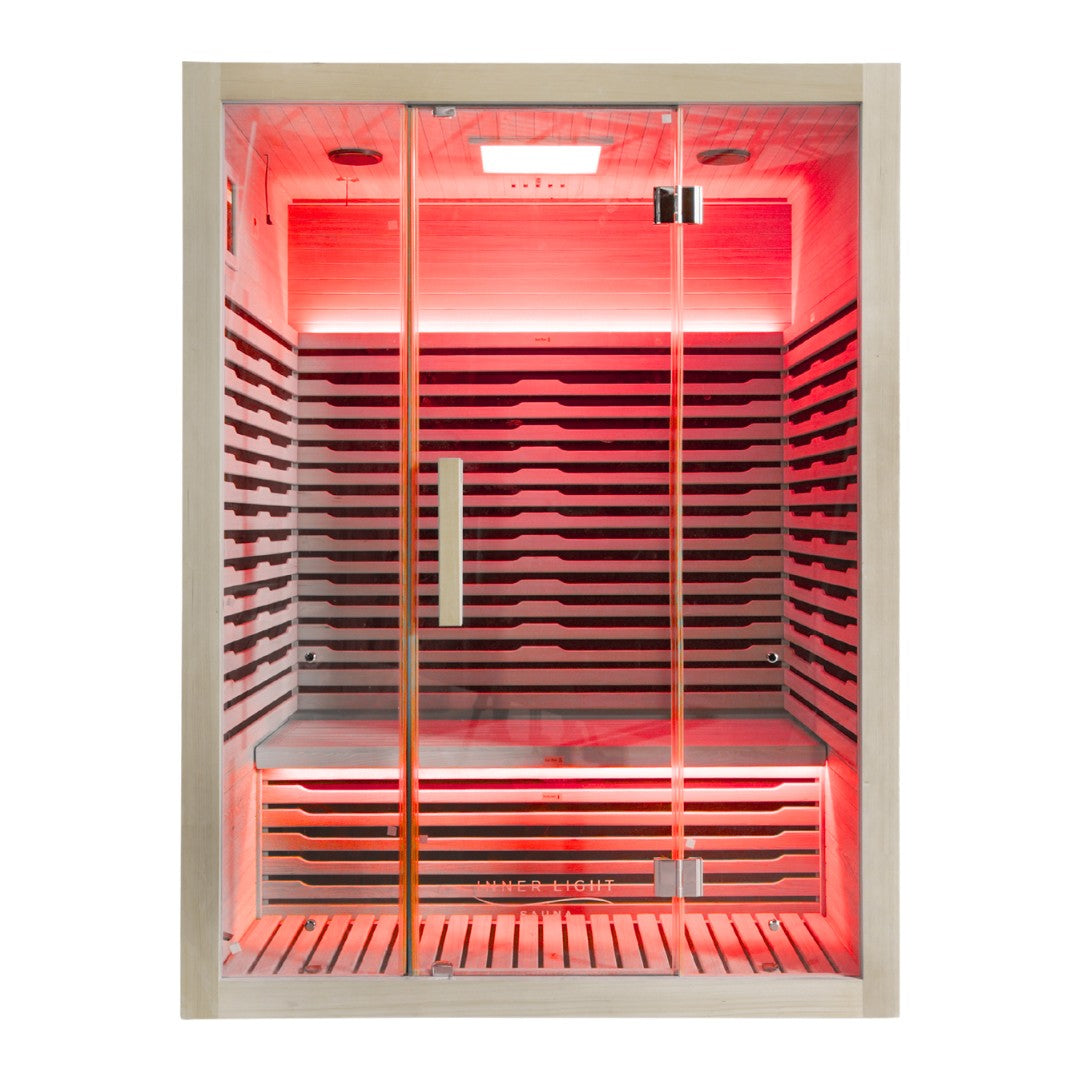
Read the guide to who should not use an infrared sauna and the guide to sauna-related dehydration before deciding. If a health professional clears home use, the Sauna Finder can help compare layouts, while the indoor infrared sauna collection and Mali 2 Person Indoor Infrared Sauna show practical cabin options. Product selection does not replace medical clearance.
Final Answer
Many people who take medication can use a sauna, but the answer must be personalised. Medicines can overlap with heat through sweating, hydration, blood pressure, heart rate, alertness and temperature control. Ask a doctor or pharmacist about the exact medicine and never adjust a dose for sauna use. If you are cleared, begin conservatively and stop at the first warning sign.
Sauna and Medication
Frequently Asked Questions
These answers cover blood-pressure medication, dose timing, sweating and when to request an individual medication review.
Can I Use a Sauna While Taking Blood-Pressure Medication?
Possibly, but it depends on the medicine, your blood pressure control and your response to heat. Ask the prescriber or pharmacist who knows your treatment.
Should I Skip My Medicine Before a Sauna?
No. Do not change medication timing or dose unless the prescriber gives specific instructions.
Does Sweating Remove Medication From the Body?
Sweat is not a reliable measure of drug clearance. Do not redose because you sweated heavily.
When Should I Ask for a Medication Review?
Ask before starting sauna if you use multiple medicines, have a chronic condition, or take a product that may affect sweating, fluids, blood pressure, heart rate, kidneys, alertness or temperature regulation. Ask again after a new medicine or dose change.
References
Hospers, L., Dillon, G. A., McLachlan, A. J., Alexander, L. M., Kenney, W. L., Capon, A., Ebi, K. L., Ashworth, E., Jay, O., & Mavros, Y. (2024). The effect of prescription and over-the-counter medications on core temperature in adults during heat stress: A systematic review and meta-analysis. EClinicalMedicine, 77, Article 102886. https://doi.org/10.1016/j.eclinm.2024.102886
Luurila, O. J., Kohvakka, A., & Sundberg, S. (1989). Comparison of blood pressure response to heat stress in sauna in young hypertensive patients treated with atenolol and diltiazem. The American Journal of Cardiology, 64(1), 97–99. https://doi.org/10.1016/0002-9149(89)90662-0
Wee, J., Tan, X. R., Gunther, S. H., Ihsan, M., Leow, M. K. S., Tan, D. S. Y., Eriksson, J. G., & Lee, J. K. W. (2023). Effects of medications on heat loss capacity in chronic disease patients: Health implications amidst global warming. Pharmacological Reviews, 75(6), 1140–1166. https://doi.org/10.1124/pharmrev.122.000782
Westaway, K., Frank, O., Husband, A., McClure, A., Shute, R., Edwards, S., Curtis, J., & Rowett, D. (2015). Medicines can affect thermoregulation and accentuate the risk of dehydration and heat-related illness during hot weather. Journal of Clinical Pharmacy and Therapeutics, 40(4), 363–367. https://doi.org/10.1111/jcpt.12294




Share: