
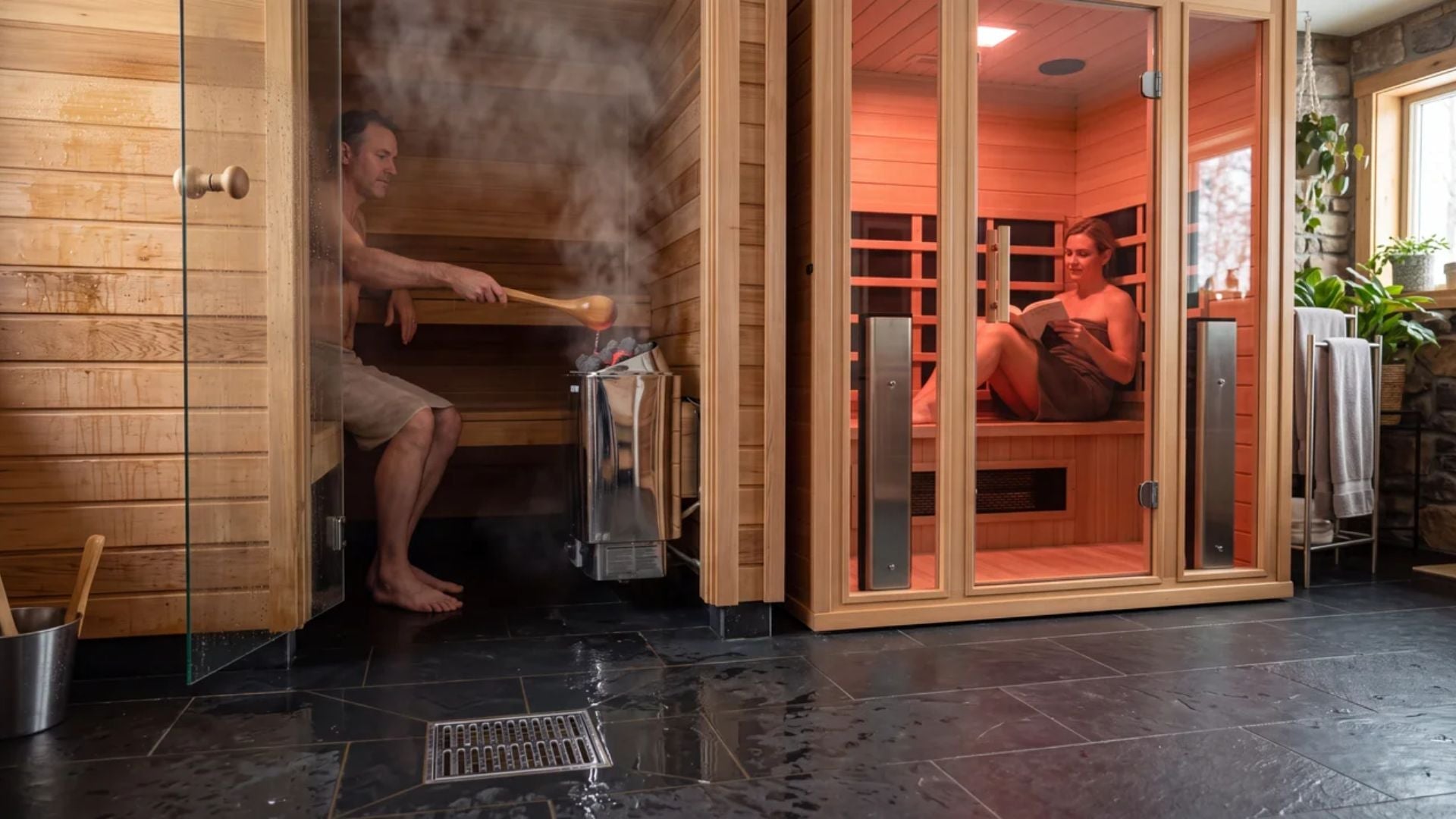
Most infrared home saunas do not need plumbing or a floor drain. Many electric traditional saunas also work without a fixed water supply, although drainage may be recommended or required depending on how water is used and where the room is built.
A steam room is different. It produces continuous moisture and normally needs a water connection, waterproofing and drainage.
Key Takeaways
The plumbing requirements depend on whether you are installing an infrared cabin, dry traditional sauna or true steam room.
- Prefabricated infrared cabins generally require electricity but no plumbing.
- Traditional electric saunas can use a bucket and ladle without a plumbed water line.
- A floor drain may still be useful in a purpose-built traditional sauna room, particularly for cleaning and moisture management.
- Steam rooms require much more moisture control and normally need plumbing and drainage.
- An outdoor sauna base needs effective site drainage, even when the cabin has no internal drain.
- Adding a shower changes the project into plumbing and wet-area work, which may introduce additional installation and approval requirements.
Does an Infrared Sauna Need Plumbing?
No, a standard infrared sauna cabin does not need a water supply because its electrical heaters operate without steam generation. You assemble the cabin, connect the correct electrical supply and use it as a dry heat space.
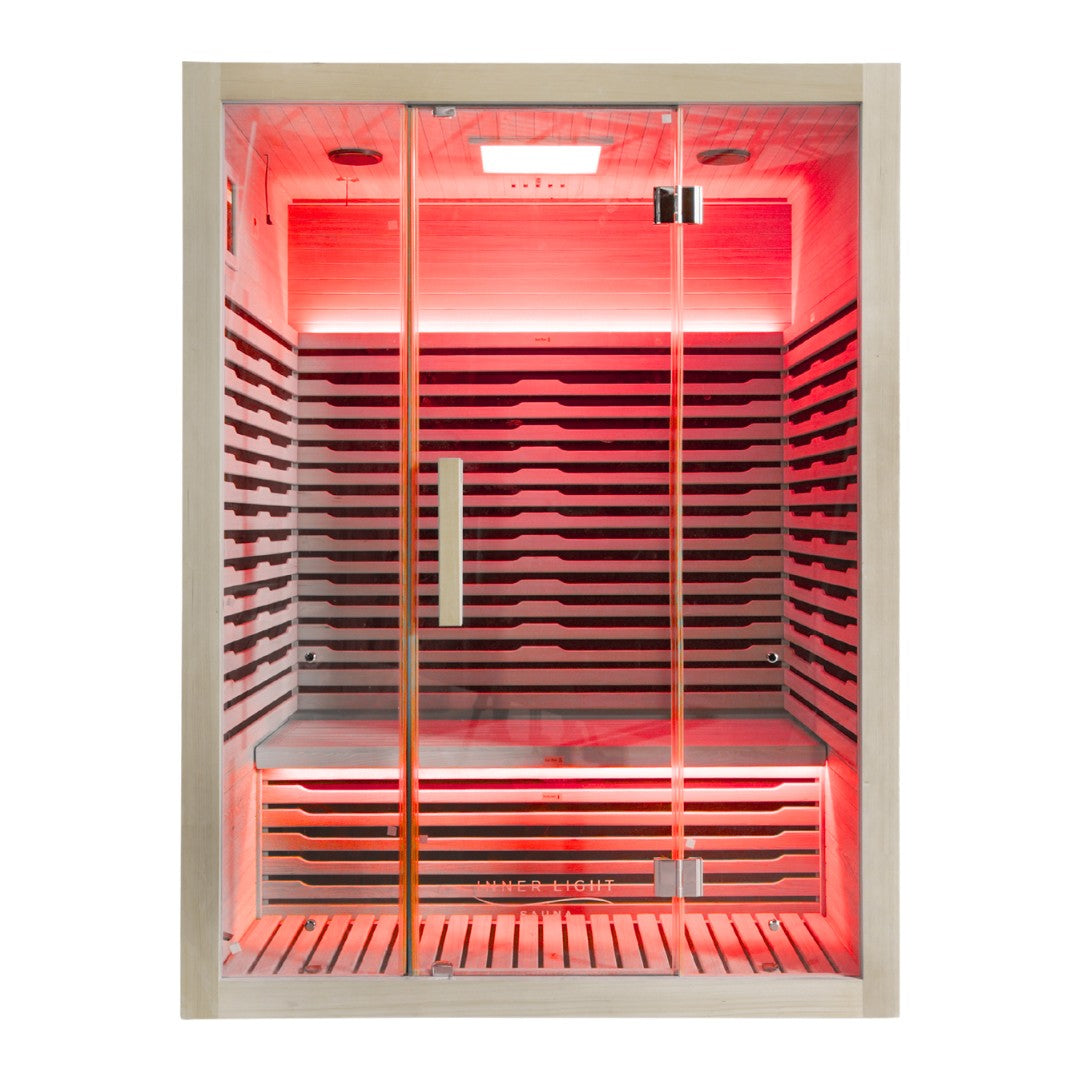
The Mali 2 Person Infrared Sauna is a straightforward example. It uses a standard 10A plug and does not need a tap, water line or waste connection.
Sweat is managed with towels, surface cleaning and ventilation after use. The timber should be wiped rather than washed with large amounts of water.
Does an Infrared Sauna Need a Floor Drain?
No, a prefabricated infrared cabin normally does not need a floor drain. These saunas operate with dry radiant heat and are not intended to be hosed out.
Place a clean towel on the bench and floor to catch sweat. After the session, wipe any visible moisture and let the cabin dry according to the manual.
If the sauna is being installed in a purpose-built commercial room, the wider facility may have separate drainage requirements. That is a building-design question rather than a normal feature of the infrared cabin.
Does a Traditional Sauna Need Plumbing?
No, a traditional electric sauna does not necessarily need fixed plumbing. Water for the stones can be carried in manually with a bucket and applied only as allowed by the heater instructions.
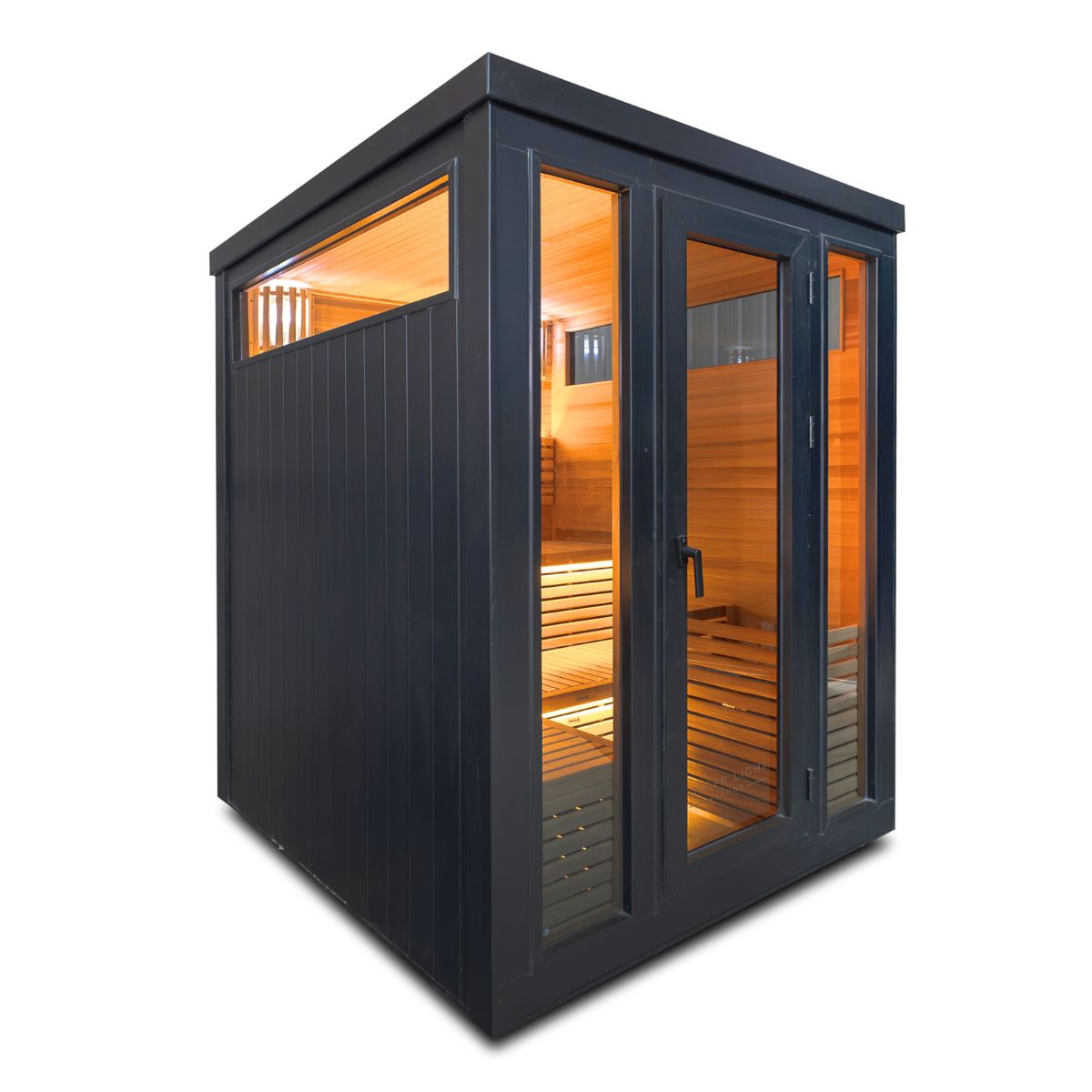
The Demfin 3 Person Traditional Outdoor Sauna uses an electric Harvia stone heater. Its essential service is the specified electrical connection, not a permanent water line.
Do not assume that every heater allows the same amount of water. Follow the current Harvia manual and pour water only onto approved sauna stones, never onto controls or electrical parts.
Does a Traditional Sauna Need a Floor Drain?
A traditional sauna may benefit from a floor drain, but the requirement depends on the room design, water use and local building rules. A drain makes cleaning and accidental water management easier in a purpose-built wet-area installation.
A prefabricated outdoor traditional cabin may instead rely on controlled water use and drainage around its base. This is not the same as installing an internal floor waste.
Ask the sauna supplier and builder to confirm whether the selected model includes or requires an internal drain. If a new drain is added, a licensed plumber and any required waterproofing approvals may be needed.
Is a Steam Room the Same as a Wet Sauna?
No, a steam room is a high-moisture enclosure with a steam generator, while a traditional sauna mainly uses hot air and heated stones. Brief bursts of steam from water on sauna stones do not turn the cabin into a steam room.
Steam rooms need a more complex setup. Harvia’s steam room guidance states that the room needs a floor drain or a floor gradient leading to an adjoining drained area. The steam generator also needs appropriate water and discharge connections.
Do not add a steam generator to an ordinary infrared or timber sauna cabin unless the entire structure was designed for it.
Does an Outdoor Sauna Need Drainage?
Yes, an outdoor sauna needs good site drainage even when it has no plumbing or internal floor drain. Rain and surface water must move away from the base instead of collecting underneath it.
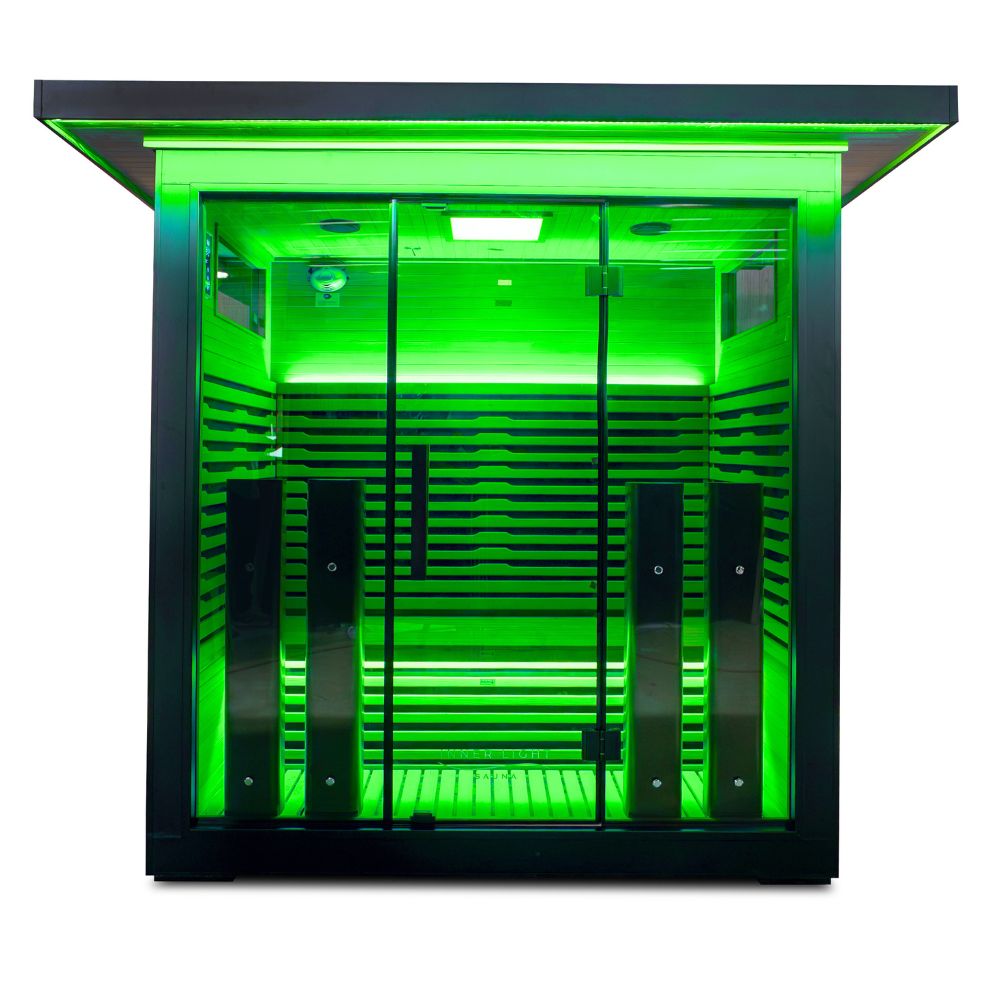
The La Mar 2 Person Outdoor Sauna is designed to sit on a hard, flat and level surface such as concrete, tiles or decking. The surrounding ground should still direct water away from the unit.
Check:
-
Roof runoff and nearby downpipes.
-
Water flowing across the yard during heavy rain.
-
Irrigation and garden drainage.
-
Low points beneath a deck or slab.
-
Clearance around seals and the exterior frame.
Site drainage protects the base. It does not mean a waste pipe must be connected to the sauna.
Can You Install a Sauna in a Bathroom Without New Plumbing?
Yes, an infrared cabin can often be installed in a suitable bathroom without connecting to the room’s plumbing. The bathroom still needs enough dry floor space, safe electrical placement, ventilation and clearance around the cabin.
Do not place the electrical connection where it may be exposed to water. A licensed electrician should assess the final position and the applicable wet-area electrical rules.
Does Adding a Shower Change the Installation?
Yes, adding a shower creates separate plumbing, waterproofing, drainage and approval work. The shower should be designed as a proper wet area rather than treated as part of a dry sauna cabin.
It can be convenient to place a sauna near an existing bathroom, but the shower and sauna remain separate systems. This also makes maintenance easier and prevents unnecessary moisture inside an infrared cabin.
What Services Should Be Checked Before Installation?
The electrical supply, base, drainage and room conditions should be checked before delivery. Plumbing is only added when the selected design genuinely needs it.
-
Confirm whether the product is infrared, traditional or steam.
-
Read the current installation and heater manuals.
-
Verify the required power point or hardwired circuit.
-
Prepare a hard, level base.
-
Plan outdoor surface drainage.
-
Ask a plumber about any proposed shower, tap or floor waste.
-
Check council or strata approval where building work is involved.
-
Review the Inner Light delivery and installation guide.
For more help comparing heating styles, read infrared saunas vs traditional saunas.
Final Answer
Most infrared saunas need electricity but no plumbing or drain. Traditional electric saunas can also work without fixed plumbing, although a purpose-built room may benefit from drainage. Steam rooms and added showers require proper water, waterproofing and waste connections.
Sauna Plumbing FAQ
Frequently Asked Questions
These answers cover common plumbing questions for home sauna projects.
Where Does Sweat Go in an Infrared Sauna?
Sweat is absorbed by towels or wiped from the bench and floor after each session. The cabin should then be left open and aired until its interior surfaces are dry.
Can You Hose Out an Infrared Sauna?
No. Do not hose out an infrared sauna unless the manufacturer has explicitly designed and approved it for that cleaning method. Excess water can damage the timber, heaters and electrical components.
Does Water on Traditional Sauna Stones Need a Drain?
Small amounts of water poured correctly onto hot sauna stones normally evaporate as steam. However, spills and cleaning water may make a drain useful. Follow the sauna room design and heater manufacturer’s manual.
Can a Sauna Share a Bathroom Floor Waste?
Only when the room and drainage system have been designed and approved for that arrangement. Ask a licensed plumber or qualified building professional to assess the proposed setup.
Do Outdoor Saunas Have a Drain Plug?
Not all outdoor sauna models include a drain or drain plug. Check the specifications and installation manual for the exact model rather than assuming drainage is included.



Share: