
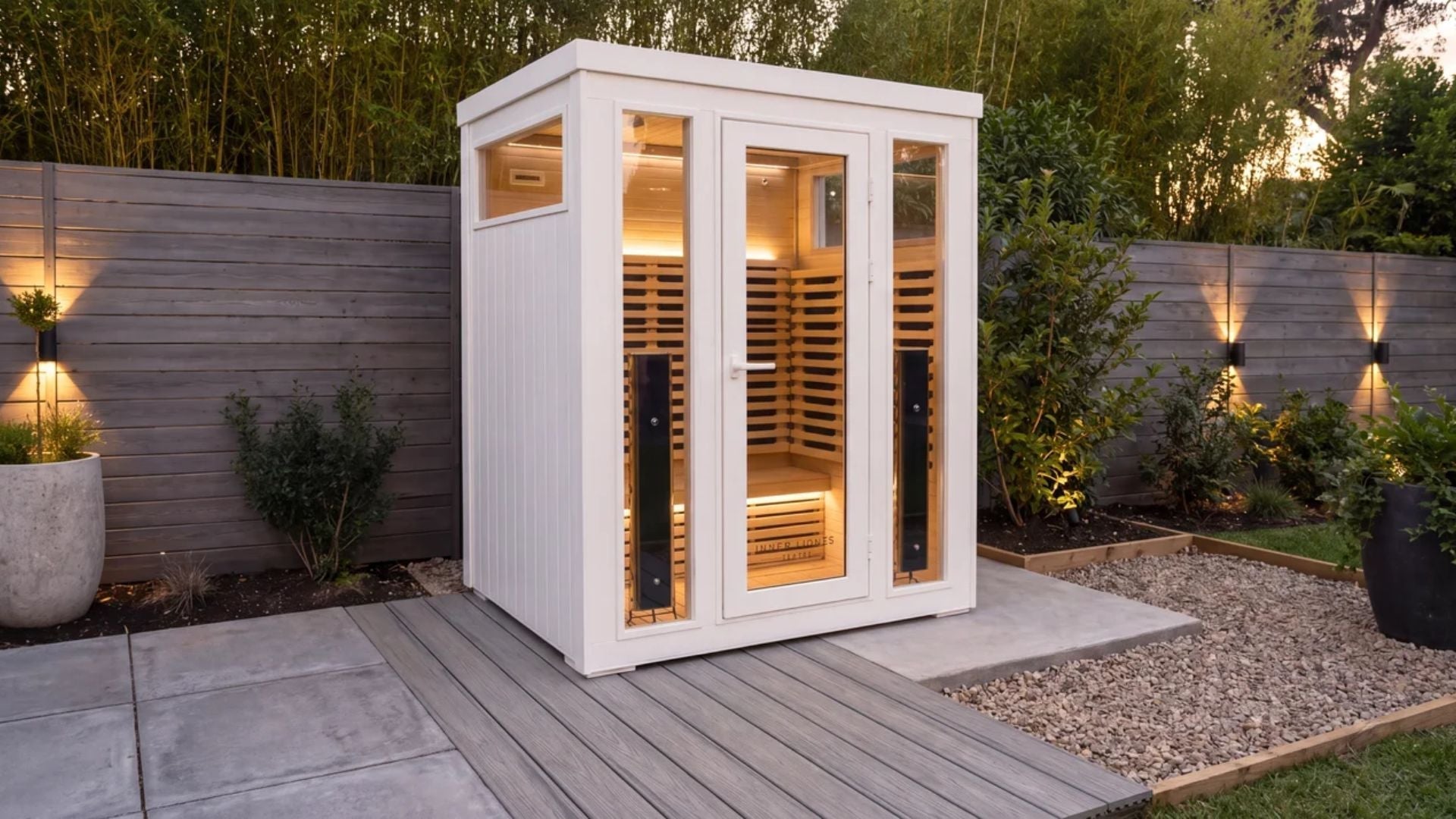
An outdoor sauna should sit on a hard, flat, level and well-drained surface. A properly prepared concrete slab is usually the most reliable option, but level pavers, outdoor tiles and structurally suitable decking can also work.
Loose soil, grass and gravel should not normally support the sauna directly. They can settle, wash out or move differently across the base, which may affect the doors, seals and cabin alignment.
Key Takeaways
The best outdoor sauna base stays level, supports the sauna’s full footprint and prevents water from collecting underneath.
- Concrete provides the most stable and predictable long-term base.
- Pavers or tiles can work when installed on a properly compacted foundation.
- Decking must be level and strong enough to support the sauna, its users and any dynamic loads.
- Gravel can improve drainage around the base, but it is not a stable finished support on its own.
- The platform must support the full sauna cabin and allow for any roof overhang requirements.
- Plan the electrical access and drainage before completing the base.
Is a Concrete Slab the Best Base for an Outdoor Sauna?
Yes, a level concrete slab is usually the best all-round base for a permanent outdoor sauna. It provides continuous support, resists settlement and is easy to keep clean.
The slab should be designed for the site rather than poured to a generic size. Soil conditions, drainage, slab thickness and reinforcement are matters for the builder or concreter. The finished surface needs to be flat enough that the sauna frame does not twist after installation.
Check the final model dimensions before work begins. The Bella Deluxe 3 Person Outdoor Sauna, for example, needs enough space for the cabin, door operation, access and ventilation around the unit.
Can an Outdoor Sauna Sit on Pavers?
Yes, an outdoor sauna can sit on pavers when they form a hard, level and stable surface over a correctly prepared base. The pavers must not rock, sink or create high points under the frame.
The quality of the layers below the pavers matters more than their appearance. Poorly compacted fill can settle after heavy rain, even when the top initially looks level.
Large-format pavers often create fewer joints beneath the sauna. Whatever size is used, the installer should check the entire footprint rather than levelling only the visible corners.
Can an Outdoor Sauna Sit on Tiles?
Yes, outdoor tiles can provide a suitable base when they are installed over a stable structural surface and rated for exterior conditions. The tile finish should be level, durable and able to handle moisture without becoming unsafe around the entrance.
Tiles do not correct movement in the slab or deck underneath them. Make sure the supporting structure is suitable before choosing the final finish.
Can an Outdoor Sauna Sit on a Timber or Composite Deck?
Yes, an outdoor sauna can sit on a deck when the structure is level, properly supported and assessed for the total load. Do not rely on the deck’s appearance or age as proof that it is strong enough.
The load includes the sauna, glass, heaters, benches, accessories and everyone using it. Larger products such as the La Mar 4 Person Outdoor Sauna place more weight over a wider footprint than a compact two-person model.
A builder or structural engineer should check joist size, spacing, bearers, posts, fixings and existing deterioration. Excessive flex can affect cabin alignment and door operation.
Composite decking may be suitable as the finished surface, but it still depends on the framing below. The product manufacturer’s load and support requirements should also be followed.
Can an Outdoor Sauna Sit Directly on Gravel?
No, loose gravel is not usually a suitable finished base directly beneath a prefabricated outdoor sauna. Individual stones can move, settle and create uneven support.
Gravel can still be useful around or beneath an engineered base because it helps manage surface water. A common approach is to use compacted aggregate below a slab or paver system, with drainage planned for the local soil and rainfall.
If you want a gravel appearance, create a structurally stable pad first and use decorative gravel around its perimeter.
Can a Sauna Sit on Grass or Bare Soil?
No, grass and bare soil are unsuitable for a permanent outdoor sauna. Soil changes with moisture and can settle unevenly, while vegetation holds moisture close to the base.
Placing the sauna directly on the ground can make levelling difficult and may increase the risk of water pooling, frame movement and restricted maintenance access.
How Level Does the Sauna Base Need to Be?
The base needs to be level across the entire support area, not only at the four corners. Small differences can become noticeable once a rigid cabin with heavy glass panels is assembled.
Do not use loose blocks or improvised shims to correct a poorly prepared platform unless the installation manual provides an approved method. It is better to repair the base before assembly.
How Should Drainage Be Planned Around an Outdoor Sauna?
Water should move away from the sauna without collecting under the frame or at the entrance. The surrounding ground can have a drainage fall, but the sauna’s supporting area must still remain flat and level as required by the manufacturer.
Consider roof runoff, nearby downpipes, garden irrigation and water flowing across the yard during heavy rain. A slightly raised pad can help in some locations, but any step at the entrance should remain safe and practical.
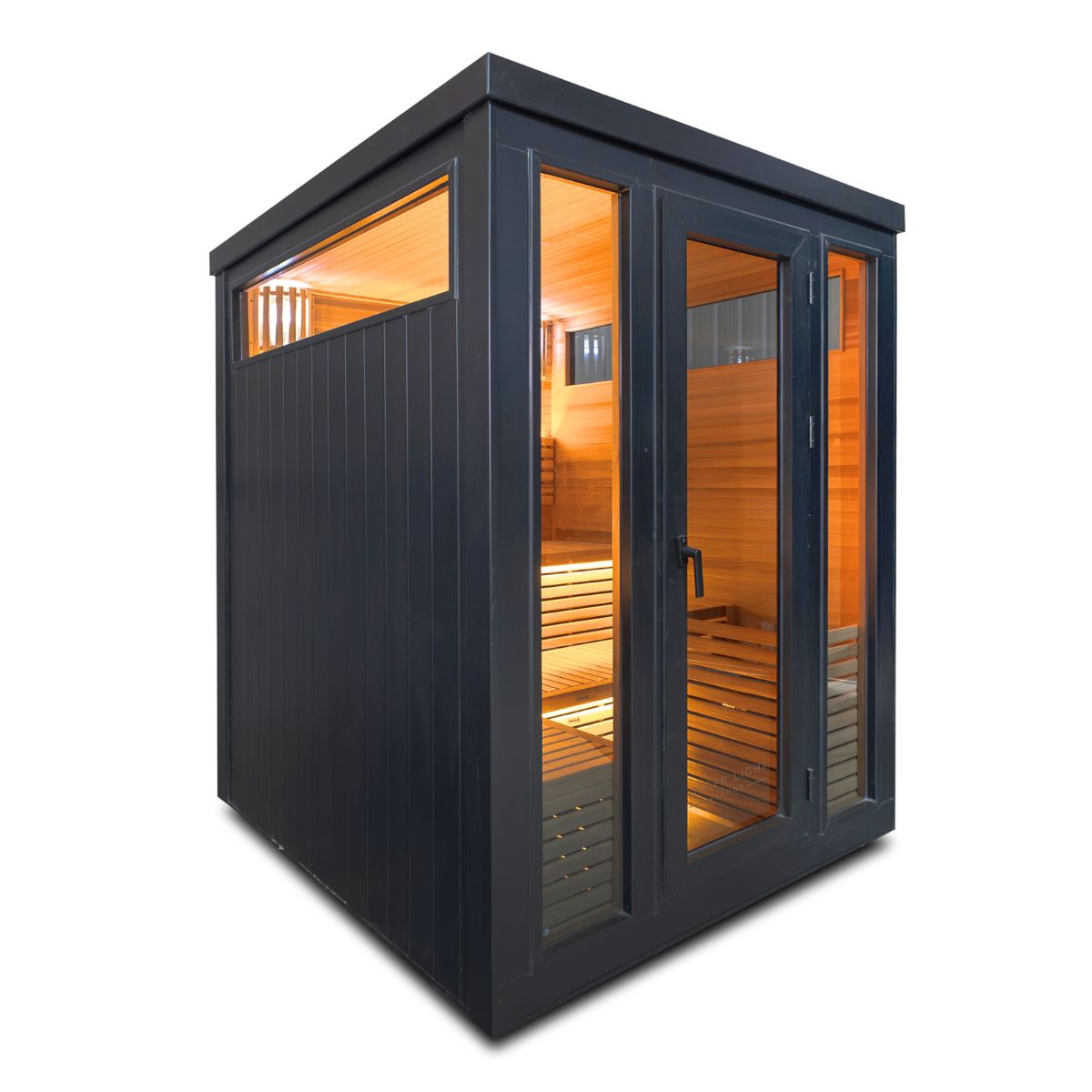
Traditional models such as the Demfin 6 Person Outdoor Sauna also need a solid base and adequate drainage around the installation area.
How Large Should the Sauna Base Be?
The base should support the full required footprint and allow the clearances stated in the current manual. Do not size it from the internal seating capacity or an old product image.
Check:
-
External cabin width and depth.
-
Roof overhang dimensions.
-
Door swing and entry space.
-
Power cable exit and electrician access.
-
Maintenance space around seals and panels.
-
Any required ventilation clearance.
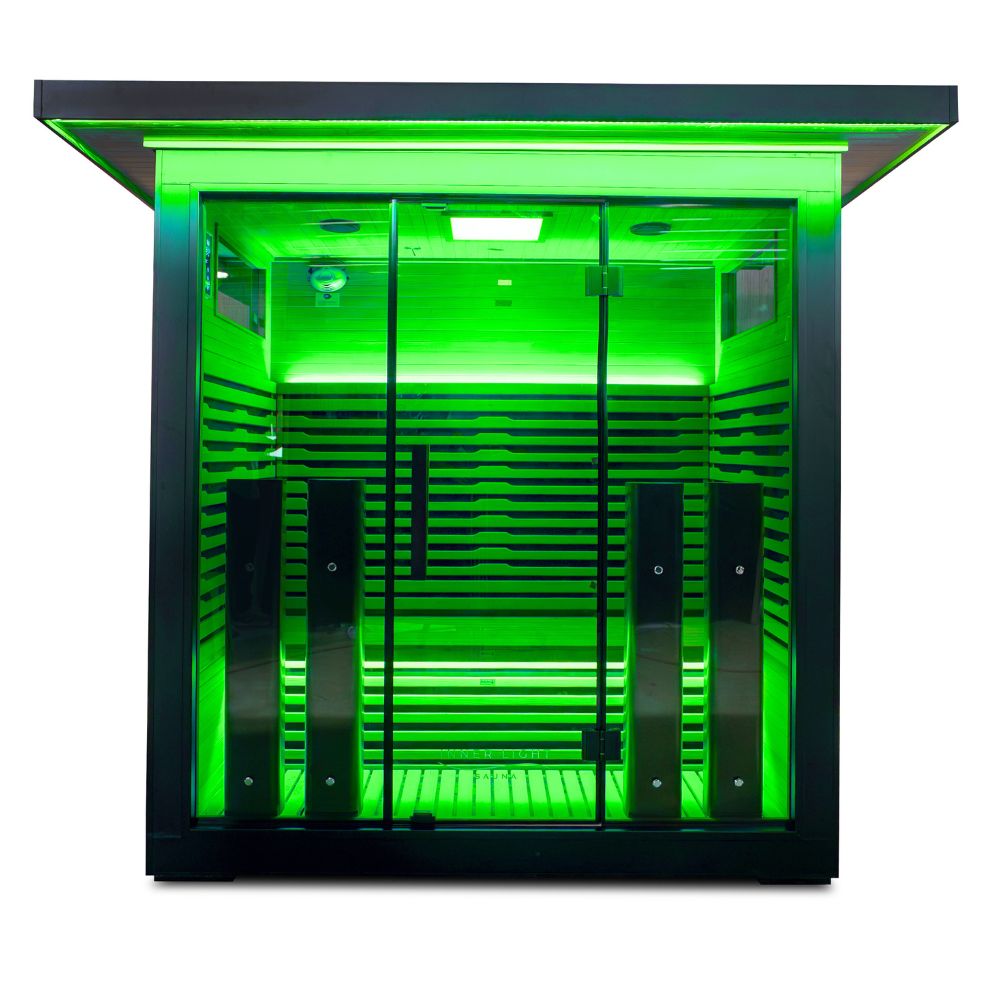
The compact La Mar 2 Person Outdoor Sauna still has a wider roof footprint than its main cabin dimensions, so both measurements need to be considered.
What Should Be Done Before Preparing the Base?
The exact sauna model, site drainage and approval requirements should be confirmed before concrete, paving or decking work starts.
-
Download the current product specifications and manual.
-
Mark the complete footprint on the ground.
-
Check local council or strata requirements.
-
Confirm delivery and assembly access.
-
Plan the outdoor electrical point or hardwired cable route.
-
Have deck loads or unusual soil conditions assessed.
-
Review the sauna delivery and installation guide.
Final Answer
A concrete slab is generally the best base for an outdoor sauna, but properly installed pavers, outdoor tiles or a structurally suitable deck can also work.
The non-negotiable requirements are continuous support, a level surface and drainage that prevents water from collecting underneath.
Outdoor Sauna Base FAQ
Frequently Asked Questions
These answers cover the practical questions customers ask while preparing an outdoor sauna base.
Does the Concrete Slab Need to Be Perfectly Level?
The slab needs to be sufficiently flat and level so the sauna frame receives even support. Ask your installer or builder to check the surface before delivery.
Can I Use Concrete Blocks Under Each Corner?
Corner blocks alone may leave parts of the sauna frame unsupported. Use the full support method stated in the product manual.
Can I Put Rubber Mats Under an Outdoor Sauna?
Only use rubber mats or isolation materials approved for the specific sauna model and base. Soft or uneven materials may allow movement instead of correcting the surface.
Should the Slab Be Larger Than the Sauna?
It often should accommodate the full roof footprint, entry area and maintenance access. However, the final slab size depends on the selected sauna model and site design.
Can I Build the Base Before Choosing a Sauna?
It is better to choose the sauna model first. Width, depth, roof overhang, cable position and total weight can vary between products.



Share: